
Author: Davis Finke, CFA
On September 16, the Federal Open Market Committee (FOMC) voted unanimously to increase interest rates by 25 basis points to a target range of 3.75%-4.00%. The decision marked the first rate hike since July 2023, with policymakers citing elevated inflation as the primary motivation. The Fed has a dual mandate to promote maximum employment and stable prices, with a longer-term inflation target of 2% as measured by the Personal Consumption Expenditures (PCE) Price Index. In August, headline PCE inflation was 3.4% year-over-year, while core PCE, which excludes the more volatile food and energy categories, was 3.0%. While inflation has fallen significantly from the highs seen in 2022, it remains above the Fed’s target. At first glance, however, the decision to raise rates may seem somewhat counterintuitive. Rate hikes are often associated with an overheating economy and excessive demand, while the current economic environment looks quite different.
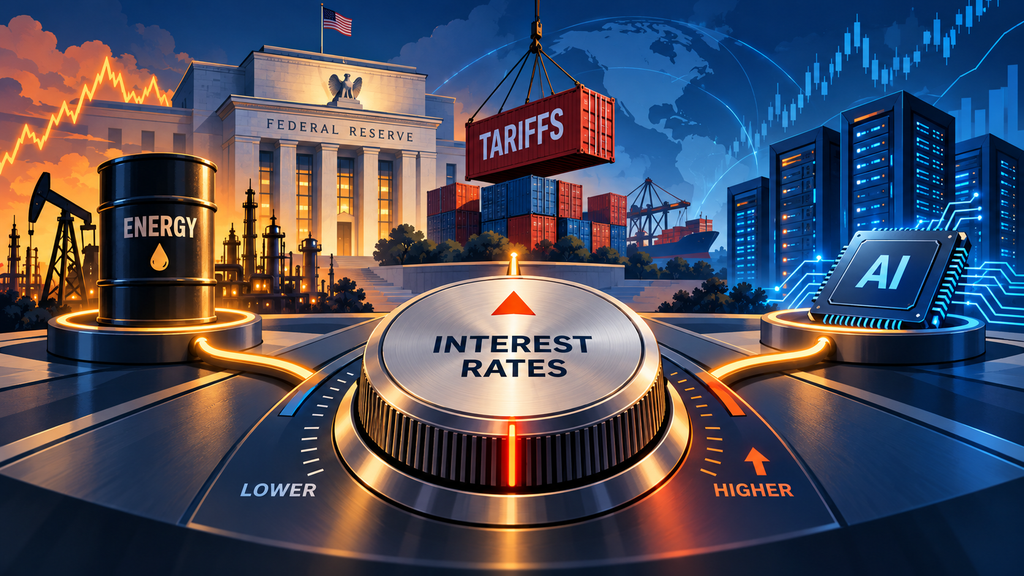
In a typical demand-driven inflationary environment, strong consumer demand can push prices higher as demand begins to outpace supply. Today’s environment is notably different, with the Fed citing several distinct drivers of inflation. The most significant of these pressures has come from energy prices, which rose sharply following the escalation of the conflict with Iran. According to the Bureau of Economic Analysis, prices for energy goods and services rose nearly 17% over the 12 months through August, far outpacing price increases across other major spending categories. The impact extends beyond what consumers pay at the gas pump, as higher energy and oil costs can raise transportation and production expenses across a wide range of goods and services. The Fed has also cited tariffs and AI-related investment as contributors. According to research from Yale’s Budget Lab, the average U.S. statutory tariff rate has risen from about 2.9% at the beginning of 2025 to roughly 11% as of late August, with Yale estimating the annual cost for the average household at around $1,100. AI-related investment has added further pressure as rapid spending on data centers and computing infrastructure has increased demand for semiconductors, electronics, power, and other inputs. Taken together, these factors illustrate how today’s inflation has been influenced by forces beyond the excessive consumer demand typically associated with an overheating economy.
An overheating economy may be characterized by above-average economic growth, a tight labor market, strong consumer spending, and accelerating wage growth. Following the global financial crisis in 2008, the U.S. experienced a decade-long expansion during which real GDP grew at an average annual rate of 2.4%. By comparison, real GDP grew at a 2.2% annualized rate in the second quarter of 2026, while the Fed’s longer-run growth projection stands at 2.0%, suggesting that current growth is moderate rather than excessive. Labor-market conditions have also become much more balanced compared with the tight conditions following the pandemic, with roughly one job opening for every unemployed worker. Meanwhile, housing remains under pressure as borrowing costs remain elevated. Unlike a typical tightening cycle, some of the inflation the Fed is confronting has originated from supply disruptions and other forces that higher interest rates cannot directly fix, while broader economic conditions might otherwise argue against further tightening.
That raises an important question: why raise rates at all? While the Fed cannot produce more oil, remove tariffs, or build more semiconductor capacity, it can reduce overall demand by making borrowing more expensive, which can slow spending and investment. The Fed’s ultimate goal remains returning inflation to its 2% target, and while higher interest rates cannot reverse the original sources of today’s inflation, they can help prevent those initial price increases from spreading more broadly, becoming persistent, or causing longer-term inflation expectations to rise. Given that the economy does not appear to be overheating, the question becomes whether the Fed can successfully navigate this balancing act by containing inflation without weakening economic growth and the labor market more than necessary.